
Social Engineering: Hacking the Human
Attackers often skip the technology and simply ask people for access. Learn the tricks they use.
Social engineering means tricking people into giving away access or information. It’s often easier for attackers to fool a person than to break a system.
Common tricks
- Pretexting: calling as “IT support” or “your bank” and asking for a password or code
- CEO fraud: an urgent email that looks like it’s from the boss, asking for a payment to a new account
- Baiting: leaving infected USB drives where staff will find them
- Tailgating: following an employee through a secure door
Why it works
Attackers use urgency, authority and helpfulness. People want to help, and they don’t want to annoy the boss.
How to protect your business
- Verify unusual requests with a call to a known number
- Make it a rule: no passwords or codes are ever shared, even with IT
- Require two people to approve new payment details
- Train staff with short, real examples
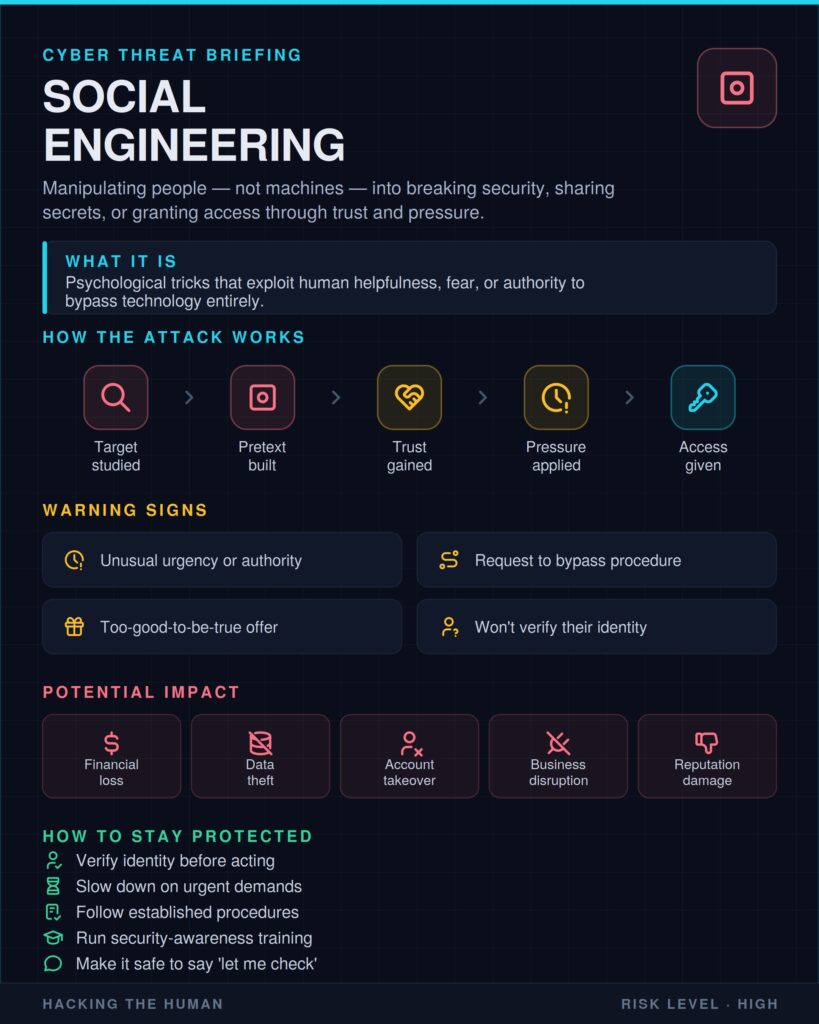
Any request that is urgent, unusual and involves money or access should be checked twice.