
What is a DDoS Attack?
Why attackers flood websites with fake traffic, who gets targeted, and how to stay online when it happens.
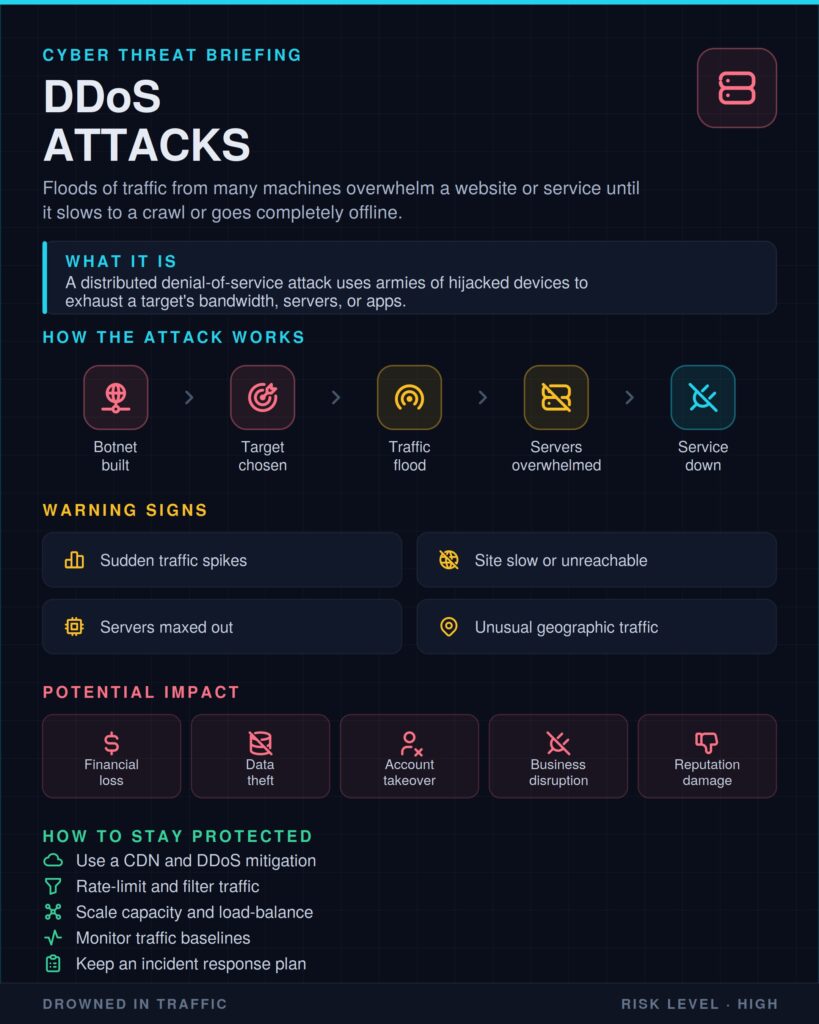
A Distributed Denial-of-Service (DDoS) attack floods your website with so much fake traffic that real visitors can’t get in. Think of thousands of fake customers crowding your shop door at once.
How it works
Attackers control networks of hacked devices called botnets: computers, cameras, even routers. They order all of them to hit your site at the same moment, often millions of requests per second. Your server runs out of power or bandwidth and stops responding.
Who gets targeted
- Online shops during busy sales
- Businesses that receive extortion demands
- Sites targeted by competitors or activists
- Any site that happens to be on a shared server that is hit
How to stay online
- Put your site behind a CDN with DDoS protection, such as Cloudflare
- Turn on rate limiting for login and search pages
- Use hosting that can absorb traffic spikes
- Have a plan: who to call and how to switch to protection fast
You can’t stop someone from attacking, but a CDN and rate limits can keep your site online.